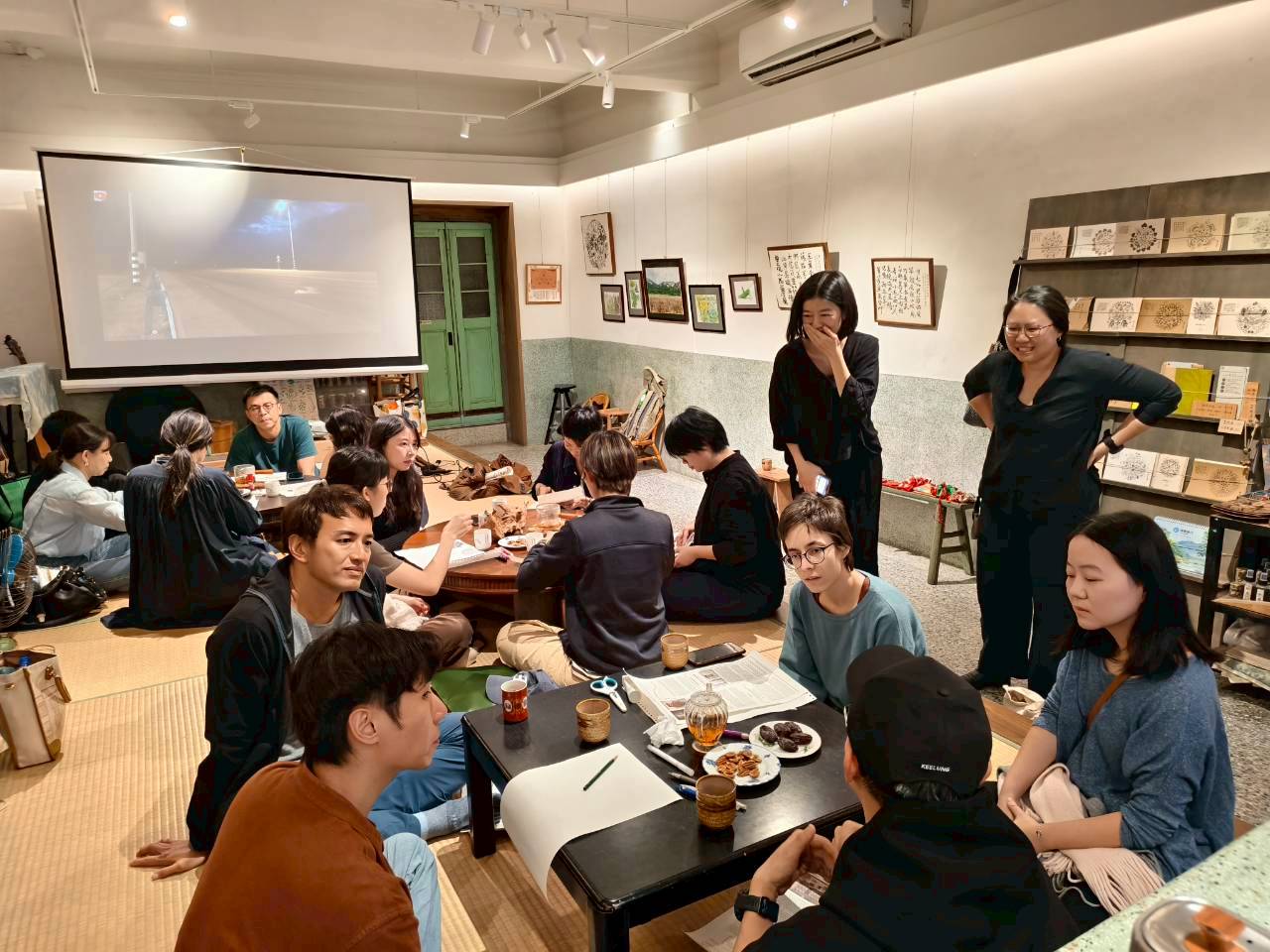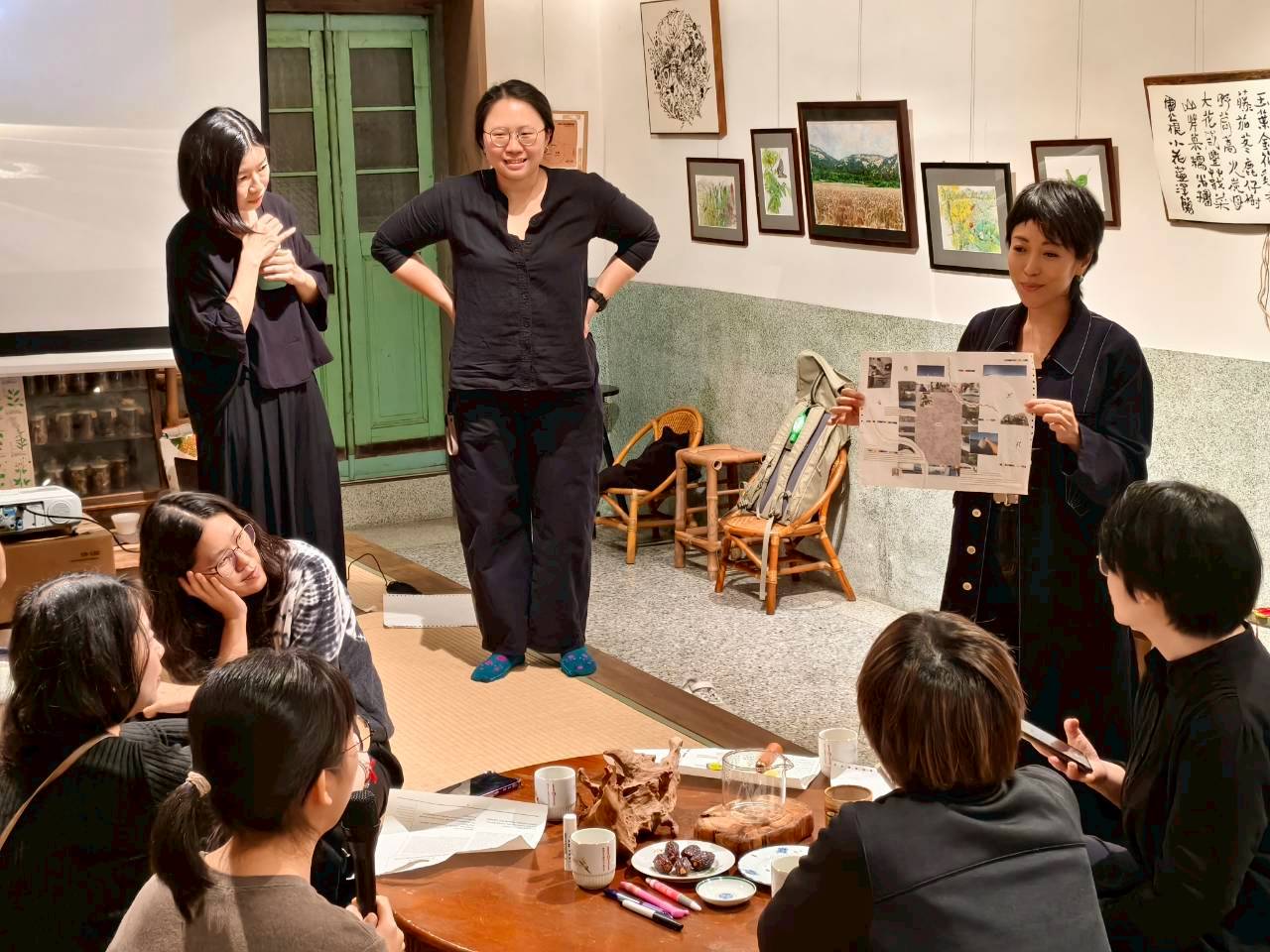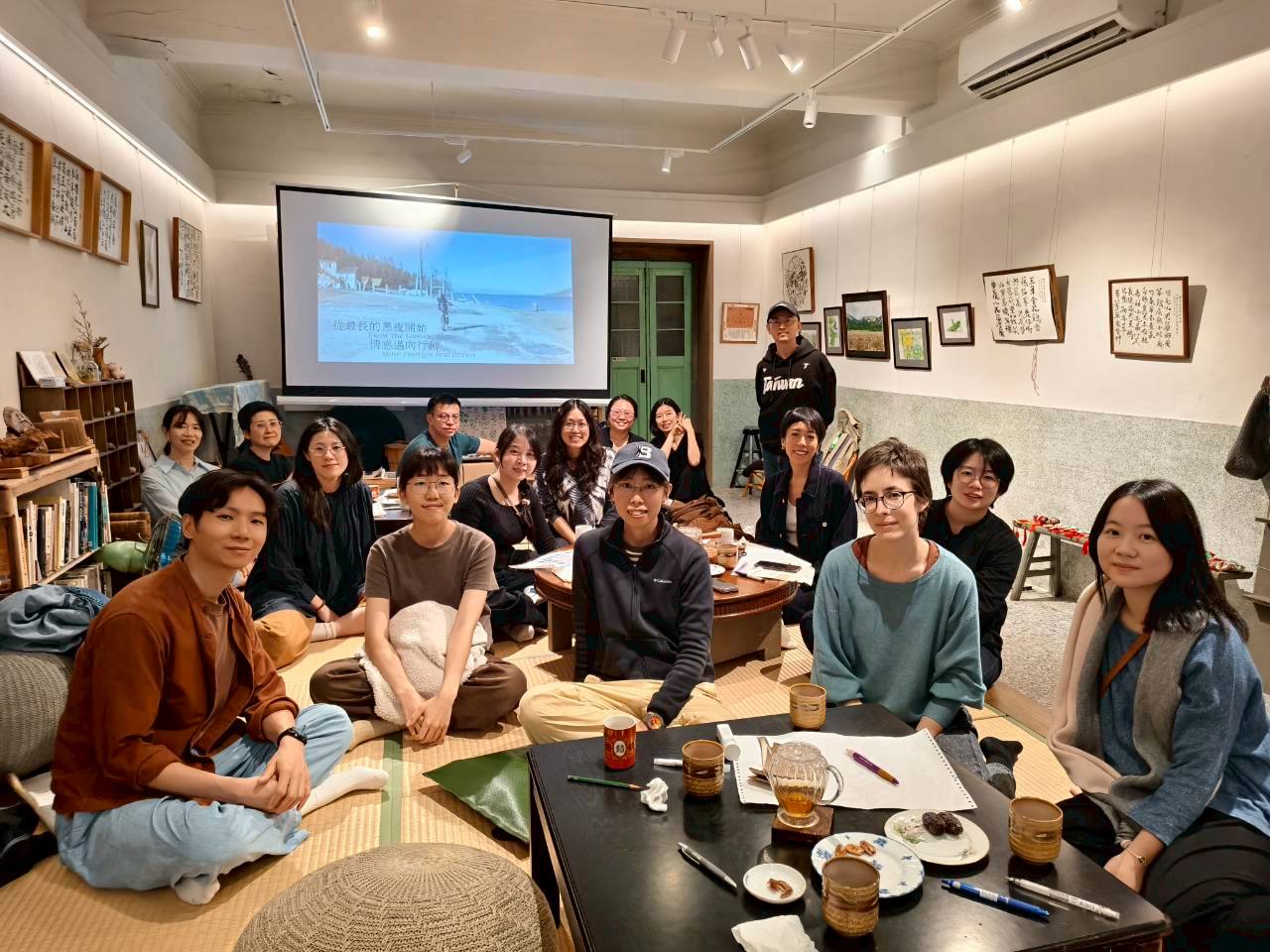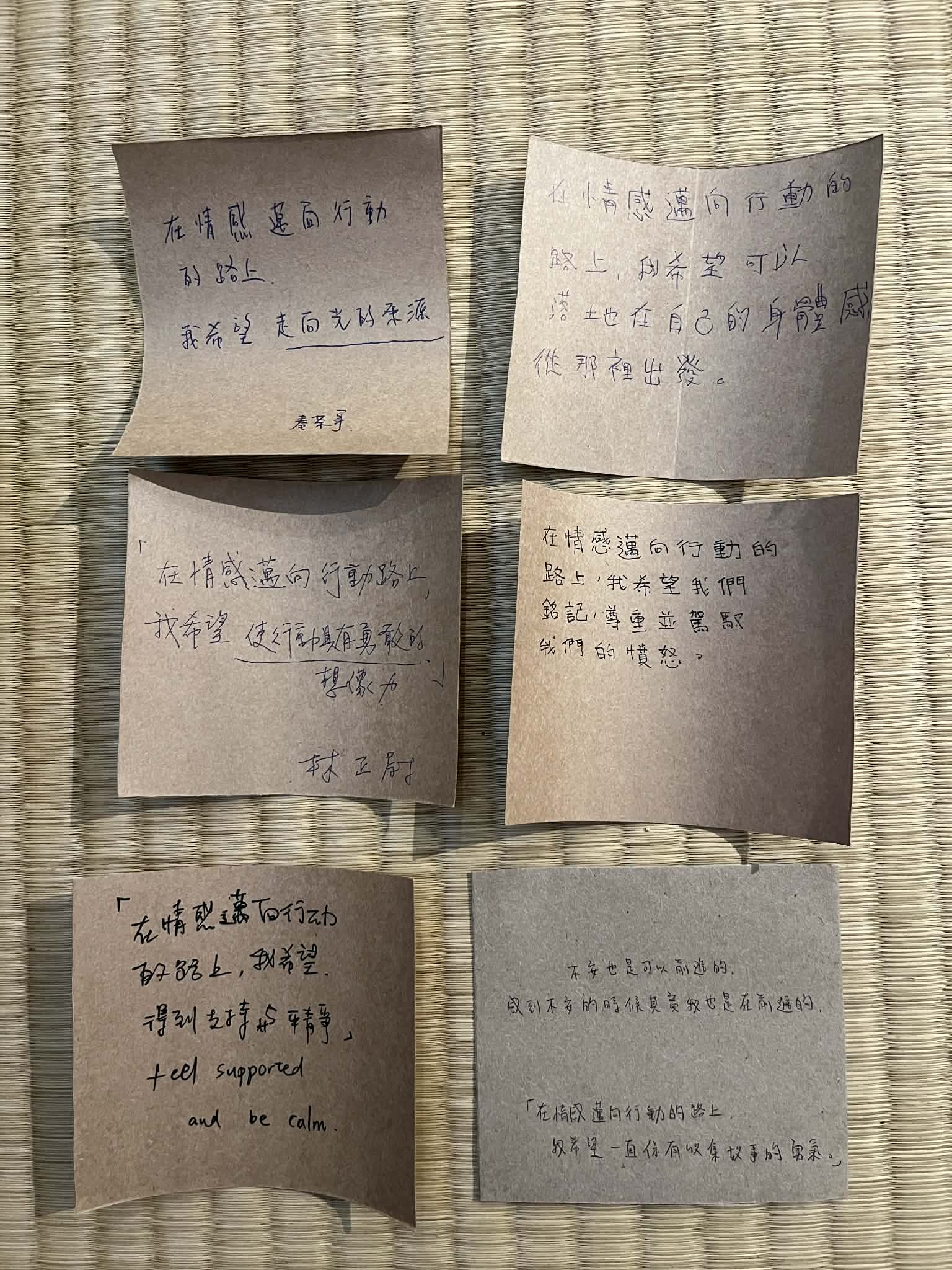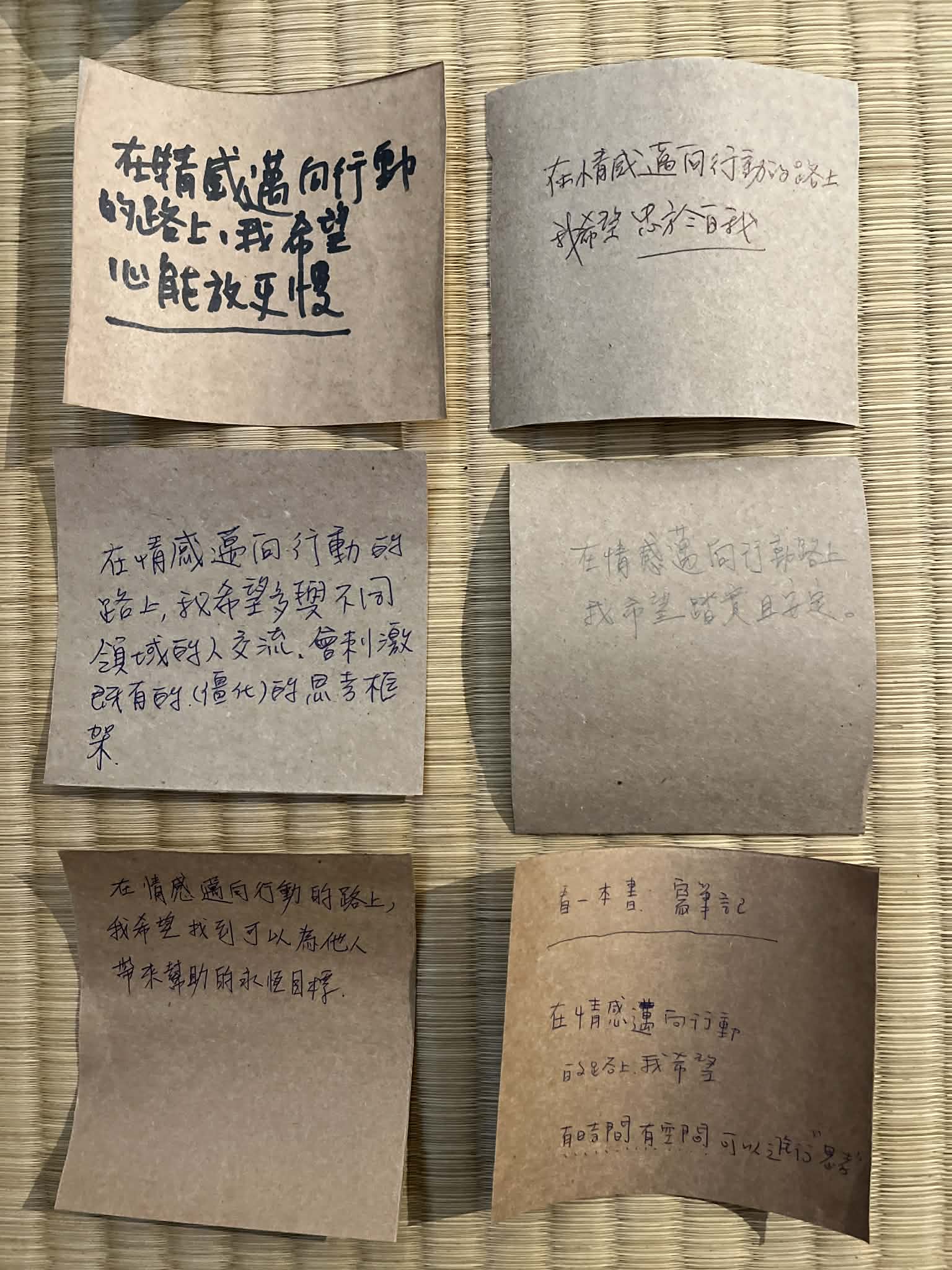
From the Longest Night — Move Emotion into Action
Over these years of research, writing, curating, community work and civic action, we have kept feeling our way through the gap between ideals and reality—between culture and politics, emotion and action, the global and the local. Again and again, amid unease and getting stuck, we have learned how to move forward.
This talk is an exercise in turning emotion into action, and the first scene we want to open for the new year.
CHU Hsiao-Chi and WU Hung-Fei will share “Learning from Unease, Walking along Borders: From Care to Collective Action.” Together we will ask: when care is more than seeing, how does it actually become action? When words are not yet complete and ideas have not yet landed, how can we keep trying within the cracks? And between research and action, how do we find our own place, re-understanding coexistence, justice and connection through feelings of unease and discomfort?
Starting from three levels—knowledge, the body and society—the talk walks through the different fields of our own experiences: from migration, memory and representation to ecology, women and healing, finally trying to weave them together: “How can we act together?”
Beginning on the longest night, this program will continue for a year. We hope it becomes a place to share difficulties and to nurture action. Anyone who resonates or is curious is welcome to practice listening, responding, learning and unlearning together. The project will also extend to our respective platforms, Citing Bar and Refugee Path (on forced migration), and to further interdisciplinary co-learning and action.
From the Longest Night series | 2026 preview
From the Longest Night is a year-long program combining research, action and public dialogue. It asks how, in a rapidly changing world, emotion can become strength, knowledge can turn into action, and care can become a visible public practice. Facing migration, conflict, cultural rupture, emotional unease and the challenges to democratic society, we hope to create an interdisciplinary, shareable and actionable public space where people from different backgrounds can think, try and move forward together.
The program unfolds along three axes—Knowledge, Embodiment and Society—through lectures, conversations, action workshops, field-based co-learning and story translation, addressing migration and borders, cultural memory, human rights and civic education, ecological wisdom, and healing and resilience, with an emphasis on the shifts and interplay between understanding, feeling and acting.
In 2026 we will invite the public and practitioners to join in more open ways: continuing to experiment within the cracks, seeking connection along borders, and letting action happen in each other’s company.
Speaker: CHU Hsiao-Chi
An interdisciplinary practitioner working on art, cultural heritage, migration, refugees and humanitarian development. With experience in curating, community art projects, human rights advocacy and international NGOs, she has carried out fieldwork and projects in Mongolia, Palestine, Cambodia, Eswatini and the Netherlands. She is the founder of Refugee Path and Taiwan Refugee Week, working to broaden engagement with forced migration and global issues in Taiwan. She is currently an affiliated fellow at the International Institute for Asian Studies (IIAS), Leiden University, and a researcher at the Taiwan Art Space Alliance (TASA). She is the author of a book on Palestine and the forgotten luggage of exile (2023). Her work explores how cultural practice can connect with social justice, narratives of displacement and sustainable development.
Speaker: WU Hung-Fei
Curator and researcher; director of Solid Art since 2019. In 2023 she founded citing bar, a platform exploring feminist environmental humanities that works through interdisciplinary and intercultural collaboration to expand diverse forms of knowledge, ecological wisdom and worldviews, sending their transformative energy to a planet mired in multiple crises and conflicts. Since 2024 she has developed the munus project, delving into the thought and practice of “contemporary healing”: from the perspectives of immunity and community, and through reading groups and collective feminist methods, it explores how, in a world full of conflict and trauma, we might co-learn, co-produce and broaden alternative wisdoms of health and healing, while attempting an unconventional exhibition-making practice of “care as an event.” Since 2023 she has written regularly for the “Eco-feminist Art” column of Artist Magazine.